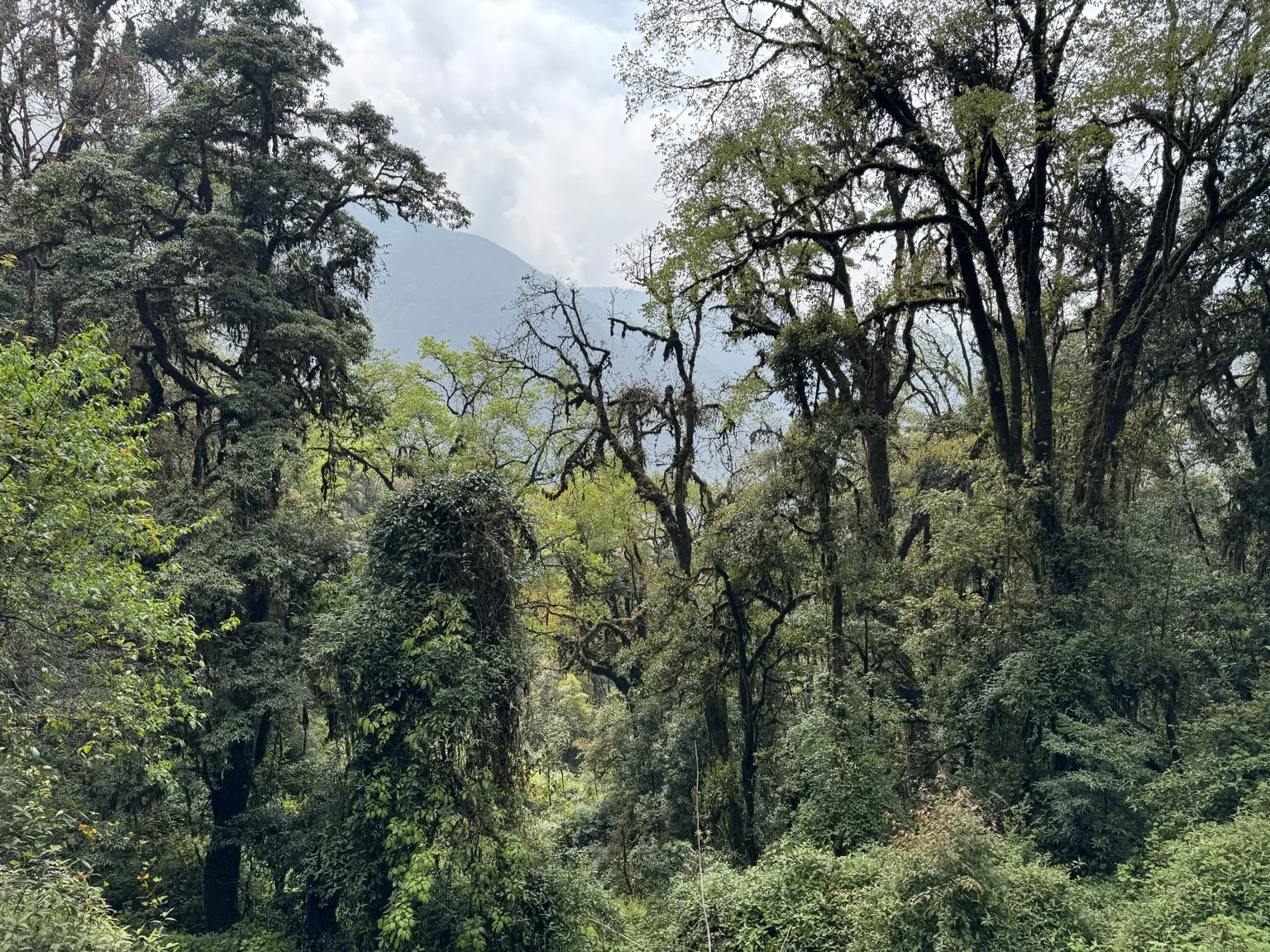
When we visited Eaglenest Wildlife Sanctuary in March 2023, we returned with memories—of the many birds we saw, the beautiful forests and mountains, and friendships formed with people from very different walks of life. It took a while to settle back into the rhythm of work and city life, but somewhere in the background, there was always the hope that we would return someday.
We had been thinking of another trip to Arunachal Pradesh in 2025, though not necessarily Eaglenest. A few destinations were on our minds, but nothing seemed to fall into place. Then came a call from our guide—April and May were good months for tragopan sightings, and he was unexpectedly available due to a cancellation. He also suggested adding Tawang, which we hadn’t been able to visit the last time.
Tragopan sightings are always special. These birds are famously elusive, sensitive to the slightest disturbance, and rarely reveal themselves easily. Arunachal itself is a gem for birdlife, but this time, we wanted to experience it differently—without a group. Just the two of us and our guide. As second-time visitors, we wanted the freedom to shape the trip around specific habitats and species, knowing that fewer footsteps and quieter mornings might slightly improve our chances with the more secretive birds.
At the same time, we were careful not to carry expectations. Nature rarely follows our plans. We trusted our guide’s understanding of the forest and its rhythms, and decided that whatever the journey offered would be enough.
Missed Trails and Quiet Intelligence
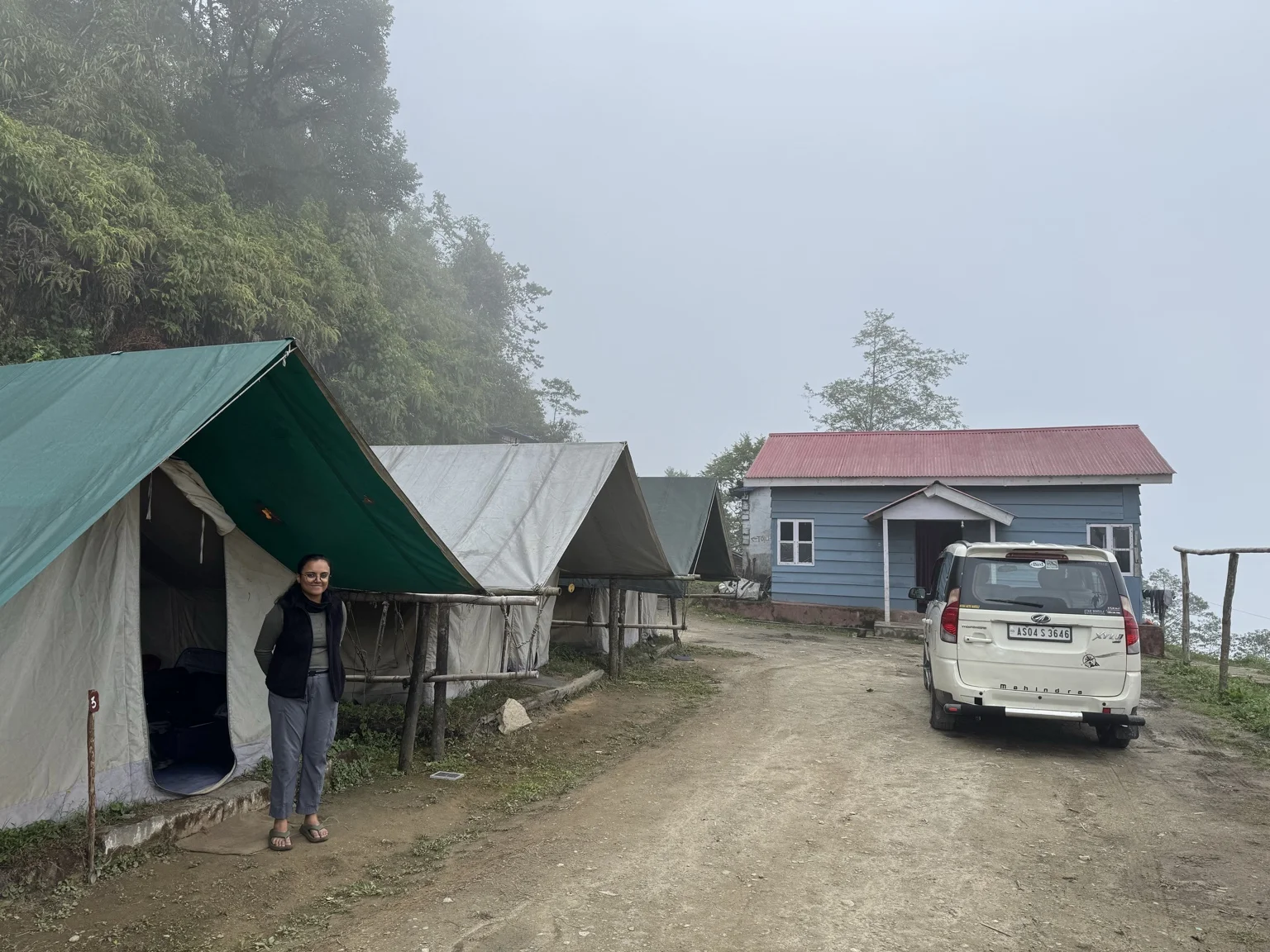
Our first attempts to spot Blyth’s Tragopan near Lama Camp did not yield any sightings. The forest remained generous in other ways, but the bird stayed hidden. By the time we reached Bompu Camp after lunch, rain had begun to fall on and off. Dense mist enveloped the forest, reducing visibility almost entirely. With conditions unlikely to improve, we decided to call it a day and rest.
Bompu Camp lies at the heart of the sanctuary, surrounded by dense forest on all sides. That evening, our guide shared something quietly encouraging—his brother, who worked at the camp, had frequently heard Blyth’s Tragopan calling nearby. On following those calls along a narrow, overgrown path, he had managed to spot the bird on previous occasions.
We decided to try our luck there the next morning.

Dawn at Bompu Camp
We were up at dawn.
To our surprise and delight, the morning greeted us without mist or rain. As we stepped into the forest, the sun’s golden light had just begun to filter through the trees. The forest felt still, almost expectant.
We followed the narrow path—slippery slopes underfoot, dense vegetation pressing in from both sides—until we reached the spot where the bird had last been seen. The area lay slightly lower than the surrounding forest floor, which rose gently around us, criss-crossed with faint natural paths. We spread out quietly, each of us watching a different direction, alert to any movement or sound.
And then, after a few minutes, it happened.
The bird emerged slowly at a slight height in front of two of us, unseen by the others who were facing away. The guide’s brother noticed it instantly and gently nudged me to look. The sight was unmistakable—the rich crimson plumage, the quiet poise, the gentle elegance of an enchanted forest dweller.
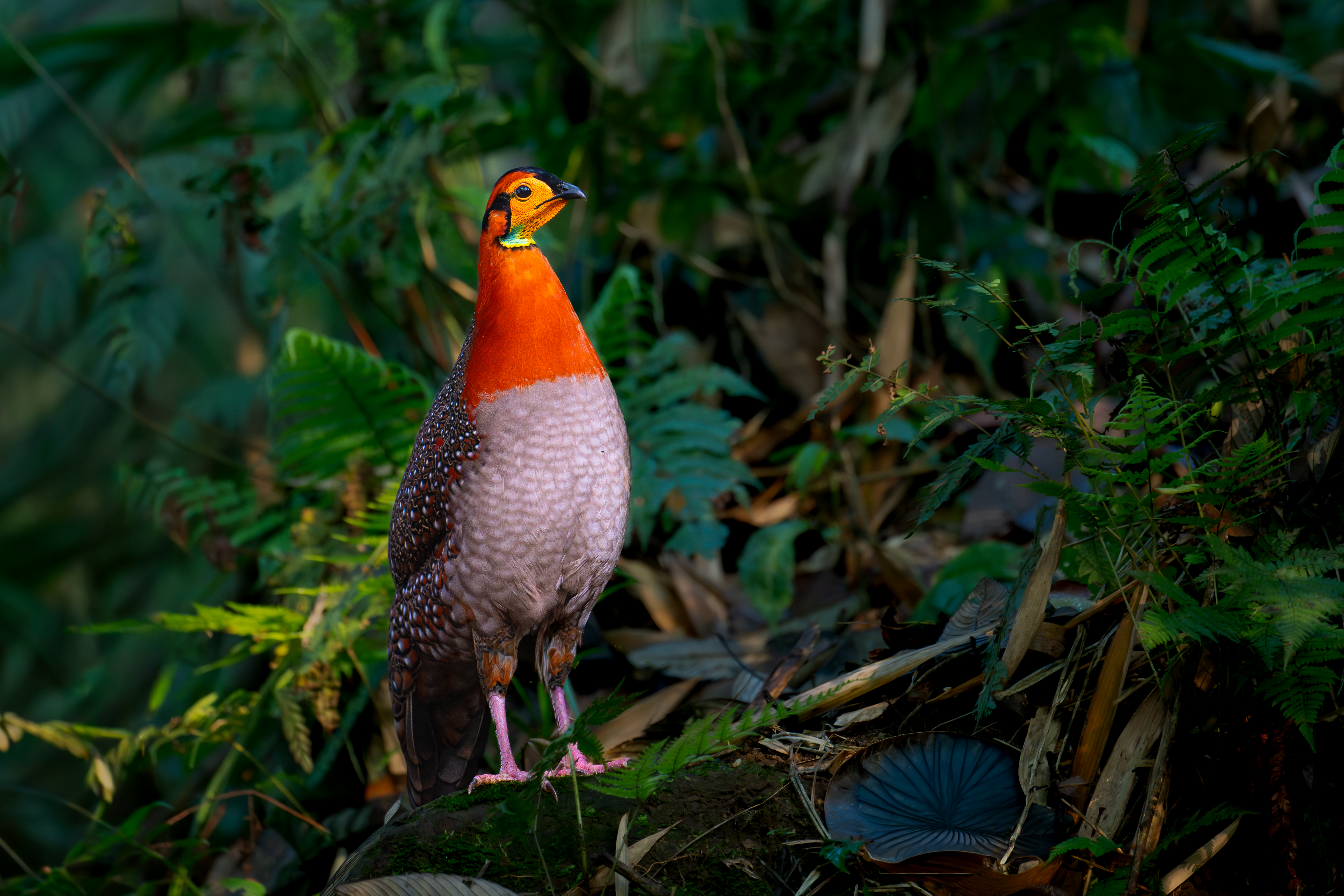
We did not dare to breathe. Cameras were raised silently as we began filming. This was not a fleeting, blink-and-you-miss-it moment. The bird stood perfectly still for a while, then began to forage calmly among nearby leaves, completely at ease in its space.
Two of us watched the bird throughout. The other two slowly repositioned themselves, placing each step with care, making sure not even a leaf stirred beneath the dense forest litter. When they finally reached a clear view, the tragopan was still there—relaxed, unbothered, present.
We watched it for nearly fifteen minutes.
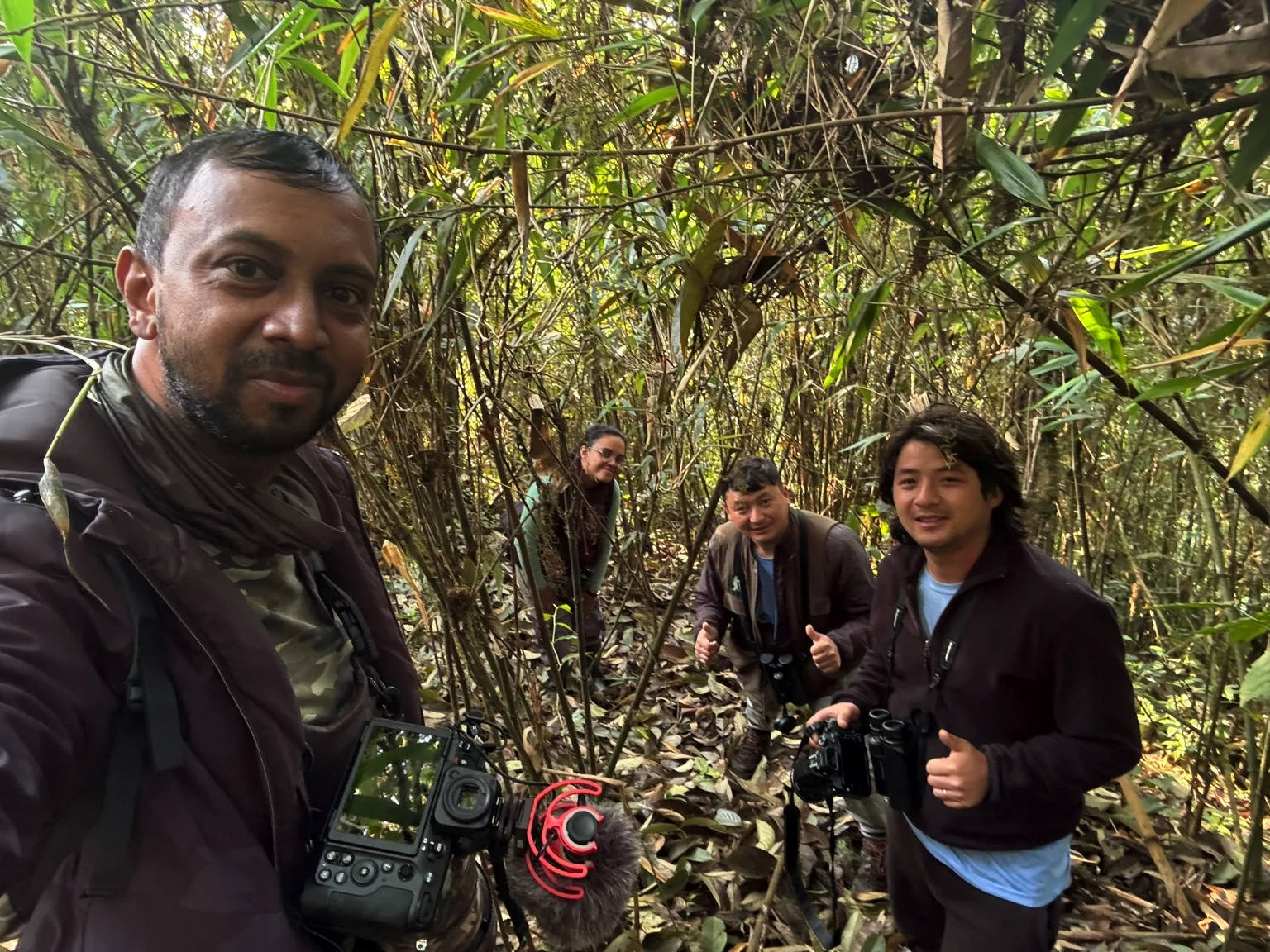
Eventually, just as quietly as it had appeared, the bird walked away and disappeared into the forest. We stood there, awestruck. Smiling. Speechless. A quick selfie captured our joy—and the habitat that had gifted us this moment.
Then, without lingering, we walked back to the camp in silence.
More Than a Sighting
Before our encounter with the Blyth’s Tragopan at Bompu Camp, we had already been incredibly fortunate—with sightings of Temminck’s Tragopan at Mandala and Satyr Tragopan near Tawang. Experiencing all three tragopans of the region on a single trip was more than we could have hoped for, and by the time we stood at Bompu that morning, our hearts were already full.
This final sighting gave us goosebumps—not because it completed a list, but because it brought together everything we love about being in the wild. It reminded us how vital these untouched forests are, not just for rare and elusive birds, but for the quiet balance they represent.
Nature, when left undisturbed, can be extraordinarily generous. And at the same time, it humbles you—making it clear that such moments are not earned or guaranteed, only gifted.